
Why AirAsia Cheap Flights Malaysia Are Still Worth It in 2026
Key points
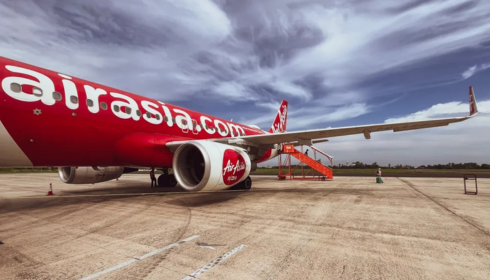
AirAsia continues to deliver the strongest budget airline option for Malaysian travellers in 2026, with the network breadth, the reasonable add-on pricing, and the operational reliability all justifying its market position. For visitors evaluating AirAsia cheap flights Malaysia versus the full-service alternatives, understanding what specifically makes the budget option work matters more than headline fare comparisons suggest.…
AirAsia continues to deliver the strongest budget airline option for Malaysian travellers in 2026, with the network breadth, the reasonable add-on pricing, and the operational reliability all justifying its market position. For visitors evaluating AirAsia cheap flights Malaysia versus the full-service alternatives, understanding what specifically makes the budget option work matters more than headline fare comparisons suggest.
The Genuine Value Proposition
AirAsia cheap flights Malaysia regularly run 50 to 70 percent below full-service equivalents on short-haul routes. KL-Bangkok at RM200 to RM350 versus MAS at RM450 to RM850. KL-Singapore at RM160 to RM280 versus MAS at RM350 to RM650. KL-Jakarta at RM200 to RM350 versus MAS at RM450 to RM800. The savings compound across annual travel volume for visitors flying multiple regional trips per year.
The Add-On Reality
Critics often cite add-ons as eroding the AirAsia advantage. The reality is more nuanced. Standard add-ons (20kg baggage at RM45-85, seat selection at RM25-45, meal at RM18-35) bring the typical all-in to RM280-450 for short-haul return — still substantially cheaper than full-service. For visitors travelling carry-on-only, the gap remains even wider. For families with substantial baggage, the all-in comparison narrows but rarely crosses over to favour full-service on routes under three hours.
The Operational Reliability
AirAsia’s on-time performance has improved meaningfully since 2024, with consistent 80 to 85 percent reliability on most routes. The disruption recovery during occasional delays runs more variable than premium alternatives but adequate for typical leisure travel. For visitors prioritising flight cost over absolute schedule precision, the trade-off favours AirAsia consistently.
Where AirAsia Wins Decisively
On short-haul routes under three hours, the budget options consistently win on total cost even with full add-ons. Annual savings for visitors making four to six regional trips per year typically range RM2,500 to RM5,500 versus full-service alternatives. The accumulated savings compound meaningfully over multiple years.
The Premium Flatbed for Medium-Haul
On routes to Tokyo, Seoul, Sydney, and Melbourne, AirAsia X’s Premium Flatbed product delivers lie-flat seats at RM4,500 to RM7,500 — substantially cheaper than Malaysia Airlines Business Class at RM12,500 to RM22,000. For travellers prioritising the lie-flat experience over lounge access and full-service ground tier, this product genuinely competes with premium full-service carriers at half the price.
When Full-Service Wins
On long-haul routes over seven hours where the discomfort tolerance is lower, full-service economy alternatives sometimes deliver better total trip value. The included meals, baggage, and seat selection on MAS or JAL economy bring the all-in cost within RM200 to RM450 of equivalent AirAsia X bookings with all add-ons. For visitors prioritising comfort on the longer flights, the full-service premium becomes worth considering.
Booking Through the Right Platform
For Malaysian visitors paying in MYR, Traveloka tends to be the most practical platform because discounted regional fares options alongside the full-service alternatives sit in one search with ringgit pricing at checkout, accepting FPX, Boost, GrabPay, and Touch n Go. The platform surfaces add-on bundle pricing alongside the base fare for accurate total-cost comparison. Compared with Agoda, which leads with hotel inventory, or Trip.com, which weights its catalogue toward Greater China rather than Southeast Asia, the regional platform consistently produces a cleaner end-to-end ringgit booking experience.
The Annual Travel Stack Calculation
For a typical Malaysian visitor making four annual regional trips: AirAsia annual flight costs at RM1,200 to RM2,000 versus full-service at RM2,800 to RM5,000. The annual saving of RM1,600 to RM3,000 funds substantial additional accommodation upgrades, attraction tickets, or extra trip days. The compounded savings over five years run RM8,000 to RM15,000 — meaningful budget for an extra major trip or premium experience.
Sample 2026 Routes and Fares
Recent cheaper alternatives patterns: KL-Phuket at RM250-400 return. KL-Hong Kong at RM550-1,200. KL-Manila at RM280-450. KL-Saigon at RM250-420. KL-Phnom Penh at RM300-500. Each represents 40 to 60 percent below typical full-service equivalents.
Final Thoughts
the budget options in 2026 continue to deliver the strongest annual travel value for visitors making regular regional trips. The combination of consistent fare savings, improving operational reliability, and the strong network breadth justify the carrier’s dominant market position. The single biggest planning lever remains booking through a trusted Southeast Asian platform that handles ringgit pricing cleanly across each trip.

Travel
Best Short-Haul Getaways from Singapore by Flight
For Singapore residents looking to plan multiple annual short-haul trips, several destinations consistently deliver strong value within 90 minutes to…

Travel
Weekend in Kuala Lumpur from Singapore: A Budget Itinerary
A weekend trip to Kuala Lumpur from Singapore consistently delivers strong cost-to-experience value for Singapore residents. The combination of cheap…

Travel
Best Zoos and Animal Parks in Southeast Asia
Southeast Asia hosts some of the strongest zoos and animal parks globally, with the Singapore Zoo consistently ranked among the…