SEA Aquarium vs Aquaria KLCC: Which Is Worth the Visit?
For families weighing up a single aquarium visit between two of the region’s most popular options, the comparison between the SEA Aquarium (now expanded as Singapore Oceanarium) on Sentosa Island and Aquaria KLCC in central Kuala Lumpur is one of the more genuinely useful regional choices. Both anchor as the headline aquarium experience in their respective cities, both pair well with surrounding family attractions, and both deliver strong educational content. The differences come down to scale, location, ticket cost in MYR, and how the day-to-day experience fits the trip rhythm. Locking in the Singapore Oceanarium 2026 entry or the Aquaria KLCC ticket ahead of the visit is what anchors the rest of the family day into place.
Scale and Collection Depth
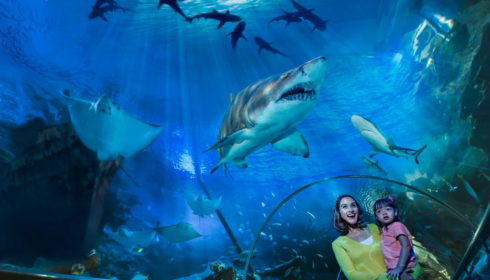
The Singapore Oceanarium, completing its transformation from the SEA Aquarium through the 2024 and 2025 expansion, houses over 100,000 marine animals across 22 themed zones. The Open Ocean Habitat tank, with one of the world’s largest single aquarium viewing panels, anchors the experience. Aquaria KLCC houses around 5,000 animals representing 250 species across multiple zones, with the 90-metre underwater walking tunnel as the most photographed feature. The Singapore Oceanarium 2026 facility is roughly five times the scale of Aquaria KLCC by collection size and visitor footprint.
Ticket Pricing in MYR
Adult day passes at the Singapore Oceanarium run roughly SGD45 to SGD55 (RM155 to RM190) in 2026 pricing, with the combined Adventure Cove Waterpark pass dropping the per-attraction cost meaningfully. Aquaria KLCC adult tickets run RM69 for Malaysian residents and RM79 for non-residents, with children at RM59 and RM69 respectively. Aquaria offers significantly better value on entry-only terms, but the Singapore Oceanarium delivers more attractions per ringgit when factoring in the broader Sentosa context and the combined-pass options.
Location and Travel Logistics
This is often the deciding factor. Aquaria KLCC sits at the base of the Petronas Towers in central Kuala Lumpur, with direct MRT access from KLCC station and the Petronas Twin Towers within a five-minute walk. The Singapore Oceanarium sits on Sentosa Island, requiring a 30-minute MRT plus monorail or cable car connection from central Singapore, and for Malaysian visitors a full causeway crossing plus the Sentosa connection. For visitors already in KL, Aquaria is unbeatable on accessibility. For visitors already in Singapore or making a deliberate Sentosa trip, the Oceanarium is the better destination.
Visit Duration
Aquaria KLCC works as a two-to-three hour visit that fits naturally between two larger activities in the KLCC area. The Singapore Oceanarium typically takes three to four hours to cover at a relaxed pace, with the expanded layout adding meaningful additional content over the older SEA Aquarium footprint. Families splitting attention with Adventure Cove next door often spend a full day across the two facilities at the Resorts World cluster.
Pair With What?
Each aquarium pairs naturally with very different surrounding attractions. Aquaria KLCC pairs with the Petronas Towers Skybridge tour, the KLCC Park, and lunch at Suria KLCC mall — a single half-day cluster handles all three. The Singapore Oceanarium pairs with Adventure Cove Waterpark, the Universal Studios Singapore day, the Sentosa beaches, and the Skyline Luge — a two- or three-day Sentosa rhythm with the aquarium as one component of the broader visit.
For Families with Different Age Groups
For families with very young children aged three to five, Aquaria KLCC’s compact size, the touch pool, and the otter encounter all suit shorter attention spans well. For families with older children aged eight and up, the expanded Sentosa facility delivers more depth across the educational displays and the Deep Sea Zone exhibits. For mixed-age groups, both work — though the longer commute to Sentosa adds friction for families with very young or very old members.
The Educational Content
Both aquariums invest meaningfully in interpretive material across the exhibits. Aquaria KLCC’s themed zones — from the freshwater Asian rivers section to the underwater walking tunnel — present a more locally focused collection emphasising Southeast Asian marine life. The Singapore Oceanarium leans into a globally diverse collection, with stronger representation of deep-ocean and polar species through the expanded zones. For families with school-age children studying biology or marine science, both deliver enough content to anchor an educational day; the Oceanarium edges ahead on raw scale.
Booking the Trip Cleanly
For Malaysian visitors paying in MYR, Traveloka tends to simplify the booking enormously because both Aquaria KLCC tickets and the Singapore Oceanarium 2026 entry sit in one search with ringgit pricing at checkout, accepting FPX, Boost, GrabPay, and Touch n Go. For trips combining both — a Kuala Lumpur weekend with a Singapore extension — the single platform handles the booking flow without requiring multiple checkouts. Compared with Agoda, which leads with hotel inventory, or Trip.com, which weights its inventory toward Greater China, the regional platform consistently produces a cleaner end-to-end ringgit booking experience.
The Final Verdict
For visitors already in KL or making a deliberate KL family weekend, Aquaria KLCC wins on accessibility, lower cost, and the pairing with the Petronas Towers area. For visitors making a deliberate Sentosa or Singapore trip, the Singapore Oceanarium wins on scale, collection depth, and the combination value with Adventure Cove. Visiting both across separate trips is genuinely worthwhile rather than redundant — the differences in scale and presentation produce noticeably different experiences. Whichever wins the family vote for the next trip, locking in the booking through a trusted Southeast Asian platform is what keeps the day smooth from start to finish.